
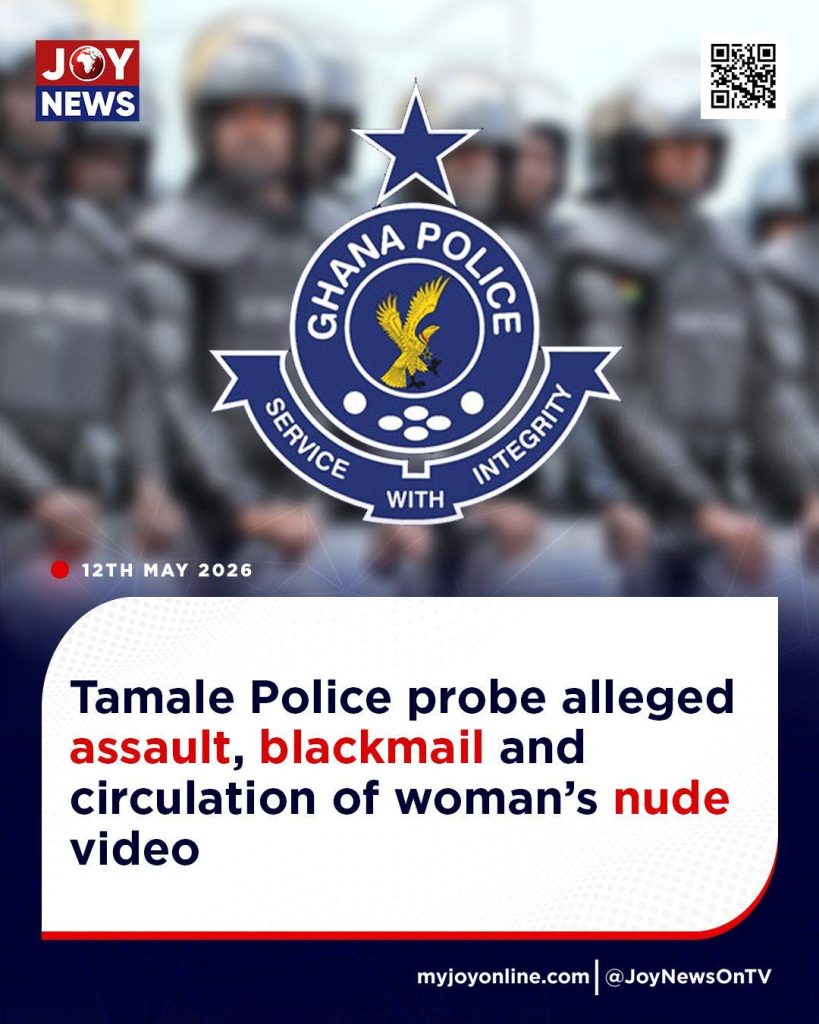
We are deeply heartbroken and outraged by the disturbing incident in Tamale involving a young woman who was allegedly assaulted, filmed in a vulnerable state, blackmailed, and further humiliated through the circulation of unlawful content online.
No young woman should ever have to endure such cruelty. No girl should be stripped of her dignity, privacy, and sense of safety.
What happened to the young lady is not an isolated incident. It is a painful reflection of the dangers many girls and young women continue to face when exploitation is normalized and humanity is ignored. It is also a reminder that violence against women and girls is evolving beyond physical spaces into digital spaces, where abuse can be amplified in seconds and preserved indefinitely.
Northern Girl Initiative strongly condemns the actions of the individuals involved, particularly the decision to take the law into their own hands without regard for due process, human dignity, or the rights of the victim.
Regardless of the circumstances, no person has the right to assault another individual, record them without consent in a vulnerable state, or weaponize private content for control, humiliation, intimidation, or profit.
A Grave Violation of Human Rights and Human Dignity
1. Non-Consensual Recording and Violation of Privacy
Reports indicate that following the incident in the car, the young woman was filmed while naked, distressed, and pleading for the recording to stop. Yet the recording reportedly continued.
This is not only morally disturbing; it is a profound violation of privacy and human dignity. A person’s most vulnerable moment should never become content for circulation, entertainment, or exploitation.
2. Sextortion and Financial Exploitation
According to reports, one of the suspects allegedly attempted to use the video to demand sex and money in exchange for not releasing it publicly.
This constitutes sextortion — a form of abuse in which intimate content is used as a weapon to manipulate, threaten, intimidate, or exploit victims.
Sextortion causes deep emotional and psychological harm. Victims often experience fear, shame, anxiety, social isolation, and long-term trauma. In extreme cases, such abuse can lead to severe mental health consequences. No young woman should ever be forced to negotiate for her dignity or safety.
3. Online Circulation and Digital Violence
When the demands were reportedly not met, the video was circulated online.
Every repost, every share, and every view contributed to the continued violation of the victim’s dignity. The internet became a space where her pain was repeatedly consumed and amplified.
Digital violence is still violence.
Its impact does not disappear simply because content is deleted. The emotional, social, and reputational consequences can persist long after the video is removed.
The act of recording someone without consent in such a condition is itself a form of violence. Under the laws of Ghana, such actions may constitute offences under the Cybersecurity Act, 2020 (Act 1038), which criminalizes non-consensual recording and the sharing of intimate content, as well as the Data Protection Act, 2012 (Act 843), which protects individuals against the unlawful misuse of personal data and digital content.
These actions may also amount to criminal offences under the Cybersecurity Act, 2020 (Act 1038) and the Criminal Offences Act, 1960 (Act 29), which address extortion, blackmail, intimidation, cyber harassment, and related forms of abuse.
Additionally, the publication and circulation of obscene or explicit material may also attract liability under the Criminal Offences Act, 1960 (Act 29).
This means that not only the individuals who recorded and originally distributed the content may be liable, but also persons who continue to share, repost, forward, or circulate such material online. Every act of redistribution contributes to the harm and may amount to participation in an unlawful act.
Together, these laws affirm that digital abuse, privacy violations, and sexual exploitation are serious crimes with legal consequences, not acts to be normalized, entertained, or ignored.
What to do when you are faced with a privacy violation, sextortion and blackmail such as this.
- Reporting the matter to the Ghana Police Service even before the perpetrator start making demands.
- Requesting a digital forensic investigation into the recording even before the perpetrator starts circulating it.
- Seeking protection orders under the Domestic Violence Act, 2007 (Act 732).
- Requesting the removal of harmful online content through the Cyber Security Authority.
- Pursuing civil action for emotional distress and reputational harm.
Do not wait until the content start circulating online. You have the right to take action immediately you discover that your privacy has been violated.
Our Collective Responsibility
This incident challenges all of us to reflect deeply on the kind of society we are building.
Will we protect the vulnerable, or exploit them? Will we stand for justice, or remain silent in the face of cruelty?
Every share of harmful content contributes to harm. Every act of silence in the face of abuse allows violence to continue unchecked.
Ending gender-based violence and digital abuse requires collective action from families, schools, institutions, faith leaders, policymakers, media platforms, and young people themselves.
Protecting Her Dignity Is a Collective Responsibility
Northern Girl Initiative urges every individual, institution, community, and digital platform to stand together in protecting the dignity, safety, and humanity of vulnerable girls and young women. We must reject all forms of violence, exploitation, humiliation, and online abuse, and instead build a society rooted in compassion, accountability, respect, and protection for every girl both offline and online.